
 Manufacturing at Our Cixi, Ningbo Production Base
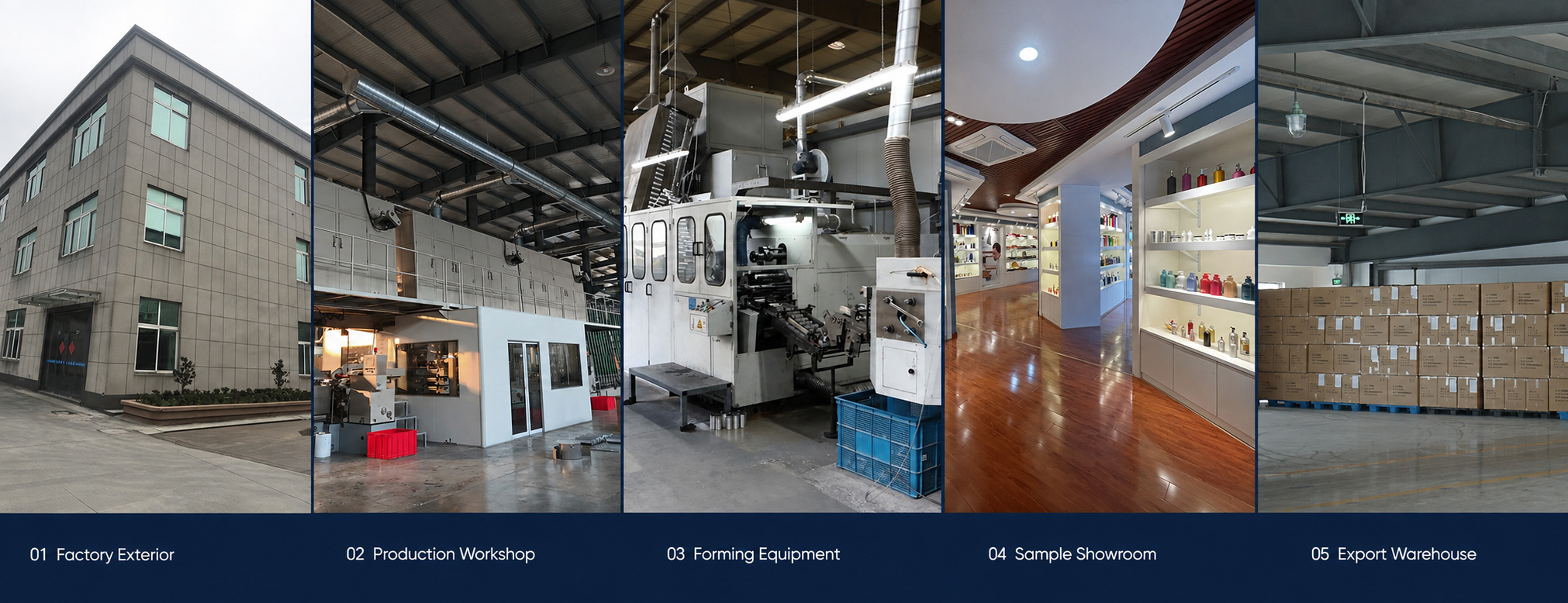
Aluveriq Packaging manufactures aluminium bottles and jars for cosmetic, personal-care, spray, beverage and selected packaging applications. Our production base in Longshan Town, Cixi, Ningbo covers approximately 8,900 m² and operates with around 95–120 employees and about five production and finishing lines.
Typical monthly capacity is approximately 0.8–1.2 million bottles, depending on bottle size, internal coating, printing, closure and finishing requirements. Production is organized around approved specifications for OEM, private-label and repeat bulk orders rather than small retail quantities.
Production Begins with an Approved Specification
Manufacturing does not begin from a product image alone. Before production, the project specification should confirm:
- Bottle model, capacity and dimensions
- Shoulder, neck and thread structure
- Filling product and internal coating
- Cap, pump or sprayer
- Surface colour and finish
- Logo artwork and print position
- Order quantity and packing method
- Applicable inspection or testing requirements
An approved sample and written specification provide the reference for material preparation, forming, coating, decoration, inspection and packing. Unconfirmed changes to the closure, artwork or coating can affect the production route and delivery schedule.
Aluminium Slugs, Impact Extrusion and Trimming
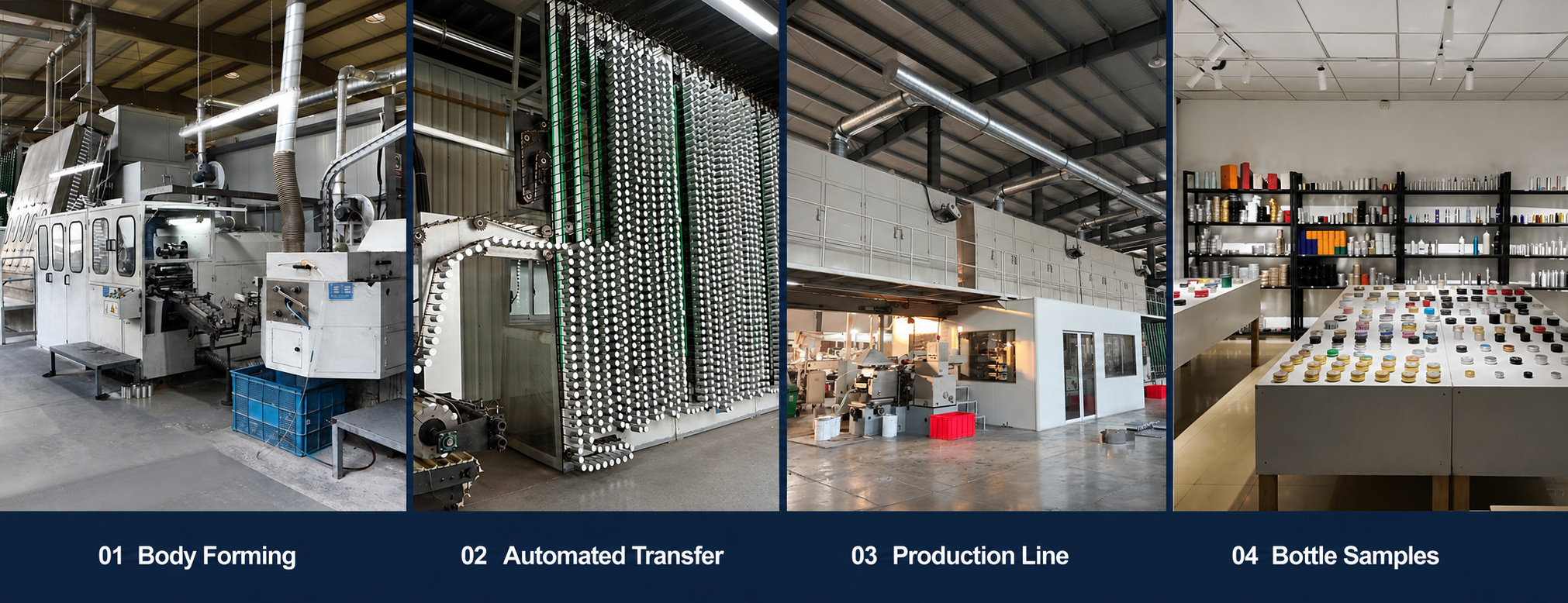
Aluminium slugs are inspected before entering the forming process. Impact extrusion presses form the aluminium into seamless bottle bodies. Bottle geometry, body condition and forming consistency are monitored during production.
The formed bodies are trimmed to control the specified height and prepare the opening for subsequent washing and neck formation. Samples are checked for visible forming defects, deformation and key dimensions before moving to the next stage.
More details about this production stage are available under Impact Extrusion & Trimming.
 Washing, Internal Coating and Curing
Formed aluminium bottles are washed to remove residues that could affect the internal coating or external finish. Bottles are then dried before the approved internal coating is applied.
The coating requirement is reviewed according to the filling product and intended application. After application, bottles pass through the specified curing process. Coating condition is checked against the project requirement before the bottles proceed to external finishing.
Where applicable, compatibility, migration or food-contact testing can be arranged through a third party. One coating should not be assumed suitable for every formulation. The complete process is explained on the Washing, Internal Coating & Curing page.
External Colour, Printing and Surface Finishing
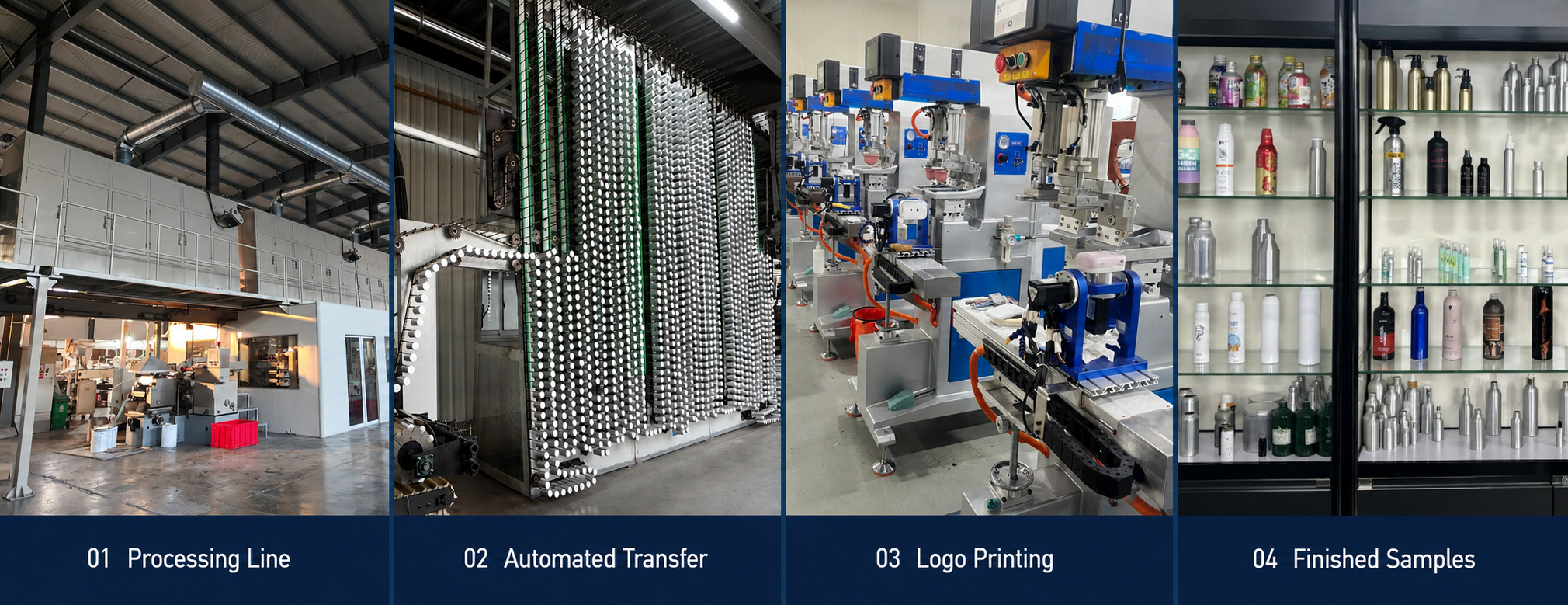
The aluminium bottle exterior can retain a brushed metal appearance or receive an approved colour and surface finish. Logo decoration is completed against confirmed artwork, print dimensions and an approved sample.
Production checks focus on:
- Colour consistency
- Surface appearance
- Logo position and orientation
- Print clarity and completeness
- Visible scratches or dents
- Consistency between production batches
Finished surfaces require careful handling throughout later production and packing. Details of artwork approval and bulk decoration are covered under Printing & Surface Finishing.
 Necking, Threading and Closure Matching
The neck and thread are formed according to the approved bottle and closure specification. Critical dimensions are checked during production because small variations can affect cap engagement, pump fit, sprayer operation and sealing performance.
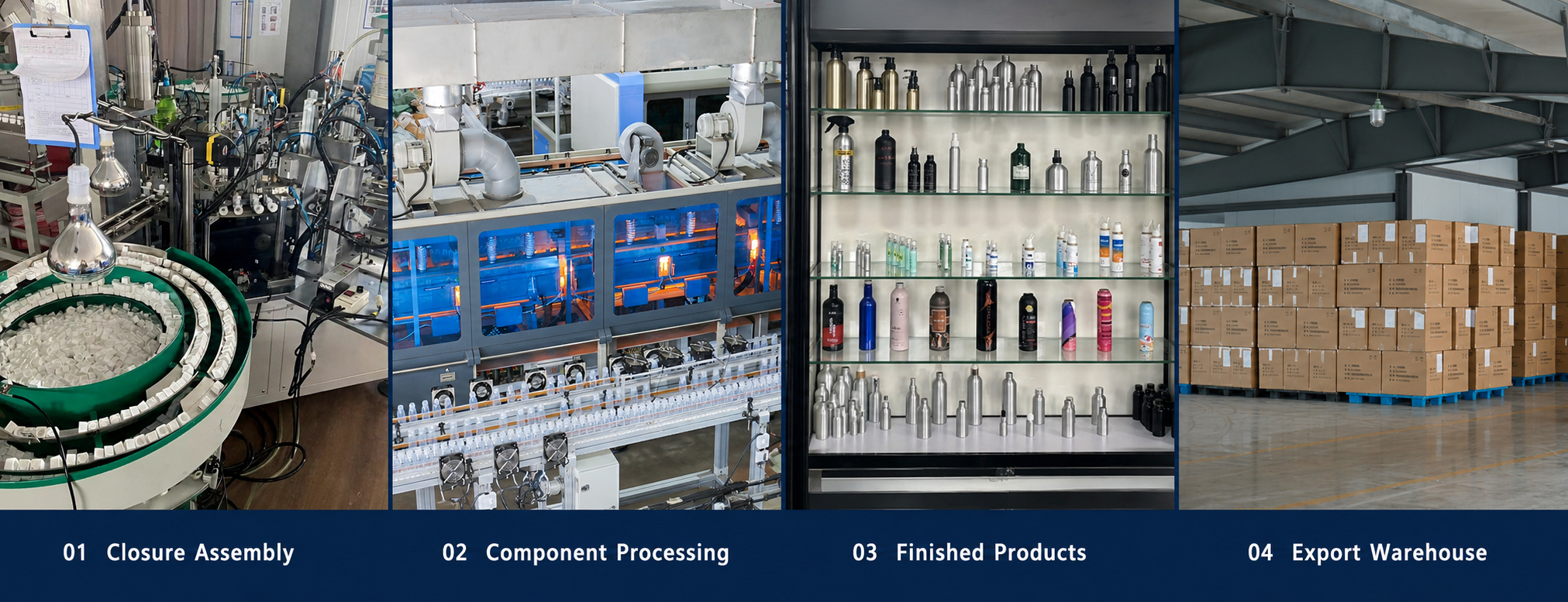
Caps, pumps and sprayers are matched to the specified neck. Checks may include closure engagement, liner position, dip-tube requirements, dispensing function and leakage where applicable. The agreed component version should remain consistent throughout production.
See Necking & Closure Matching for the relationship between bottle-neck formation and closure performance.
In-Process and Final Quality Checks
Quality control is carried out during production and before shipment. Bulk bottles are compared with the approved sample and specification.
Inspection typically covers:
- Bottle height and diameter
- Neck and thread dimensions
- Internal coating condition
- Closure fit
- Leakage where applicable
- Colour and print appearance
- Scratches, dents and deformation
- Order quantity
- Packing arrangement
Third-party inspection can be supported when required by the buyer or order agreement.
Protective Packing and Export Preparation
Aluminium bottles can be damaged by bottle-to-bottle contact during handling and transport. Packing may include individual PE bags, protective sleeves, corrugated dividers, inner boxes and reinforced export cartons.
Pumps, sprayers or caps may be fitted or packed separately according to the approved specification. Carton labels, barcodes, shipping marks, quantities and pallet requirements are checked before shipment preparation.
 Production Lead Time and Project Information
Mass production typically requires approximately 25–40 days after the bottle sample, artwork and specification are approved. Order quantity, new tooling, coating, printing, closure availability and custom packaging can affect the schedule.
For a production review and quotation, provide the filling product, bottle capacity, dimensions or reference model, closure, quantity, coating requirement, colour, artwork, packaging, destination country and preferred shipping term.