

Forming the Bottle Neck After Body Processing
After forming, washing, internal coating and external finishing, the aluminium bottle body proceeds to neck formation. This stage creates the shoulder transition, neck diameter and thread or closure interface required by the approved packaging specification.
Neck geometry affects more than appearance. It determines whether a screw cap, pump or sprayer can be assembled correctly and whether the complete package performs as intended. Variations in neck diameter, thread profile, height or sealing surface can cause loose fitting, difficult assembly, leakage or inconsistent dispensing.
Necking and threading equipment must therefore be set according to the confirmed bottle and closure combination rather than a general bottle size.
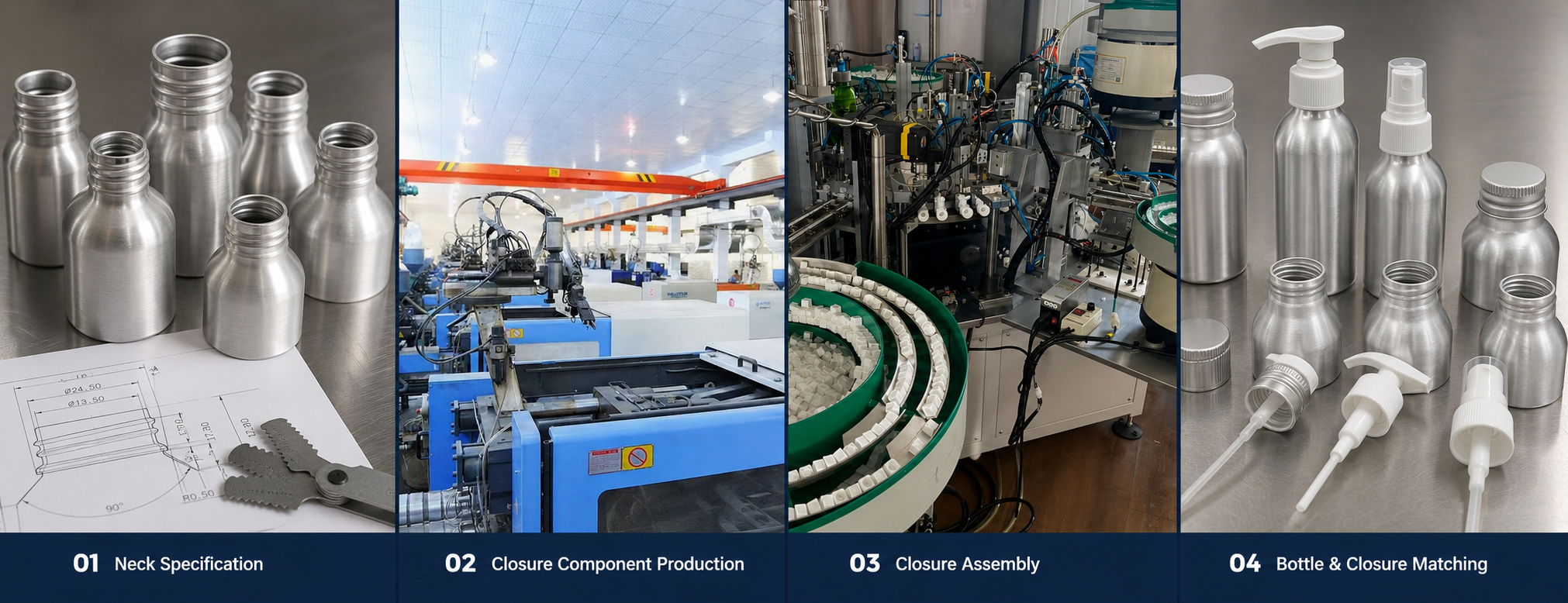 Confirming the Neck Specification
The neck specification should be established before production samples are approved. Buyers need to identify the required closure type and, where available, provide a closure drawing, reference sample or technical specification.
Important confirmation points include:
- Neck diameter, height and opening
- Thread profile or closure interface
- Bottle shoulder shape
- Sealing surface and liner contact
- Dip-tube length for pumps or sprayers
- Required cap, pump or sprayer material
- Assembly and dispensing requirements
If the buyer already has a closure supplier, bottle and closure drawings should be reviewed together. When Aluveriq Packaging supplies the complete bottle-and-closure set, available closures can be matched against the selected bottle model before sampling.
Our internal coating and closure matching page explains how the filling product, coating and closure system are reviewed as one packaging specification.
Matching Caps, Pumps and Sprayers
Aluminium bottles may use screw caps, dispensing pumps or sprayers depending on the application. Cosmetic and personal-care bottles often require pumps or spray closures, while beverage and other packaging projects may use application-specific threaded caps.
A closure should not be selected by appearance alone. Thread engagement, sealing components, gasket or liner design, dip-tube length and dispensing output can all affect practical performance.
The filling product must also be considered. Viscosity, chemical characteristics and dispensing expectations may influence the suitable pump or sprayer. Compatibility between the formula and closure components remains the buyer’s responsibility to confirm through appropriate testing where required.
Special closures or colours can affect MOQ, sample time, unit cost and procurement lead time. Using an existing compatible closure usually simplifies development and reduces project risk.
Sample Assembly and Functional Review
Bottle and closure samples are assembled together before approval. The review should confirm that the closure engages correctly, sits at the intended height and can be applied without thread damage or excessive force.
For pumps and sprayers, the sample review should also cover dip-tube length, actuator position and dispensing function. Visual alignment matters for branded packaging, but it does not replace fit and performance checks.
Changes to the neck, coating, closure or filling product after approval may require another sample evaluation.
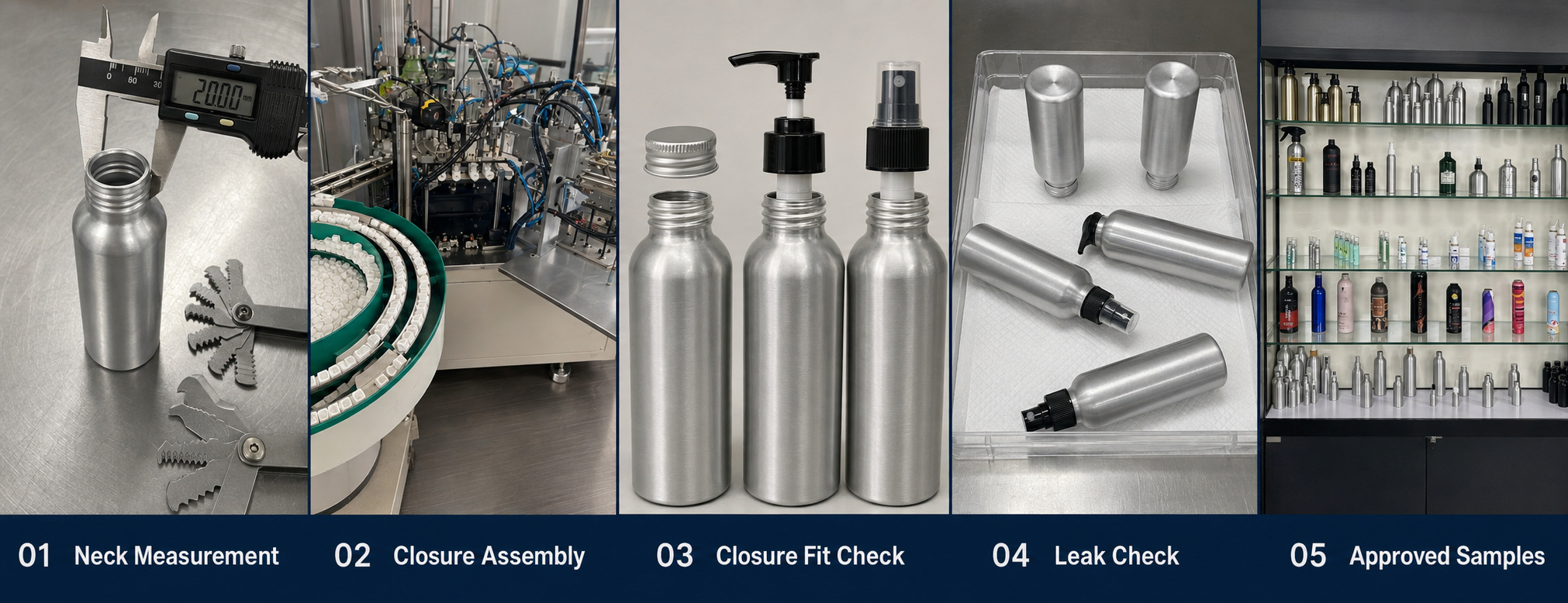 Closure Fit and Leak Testing
During bulk production, neck dimensions and closure fit are checked against the approved specification. Applicable bottle-and-closure combinations undergo leak testing under the agreed test method.
Inspection may cover thread engagement, cap position, closure fit, gasket contact, dispensing function and visible neck deformation. Testing conditions should reflect the packaging application and agreed project requirements.
Further details are available on our quality control and leak testing page.
Information Required for Quotation
For a practical quotation, send the bottle capacity or model, filling product, closure type, neck drawing or reference sample, estimated quantity and destination market. For pumps or sprayers, include the required dispensing function and dip-tube requirement if known.
These details help determine whether an existing bottle-and-closure combination is suitable or whether additional sample development is required. They also affect MOQ, closure sourcing, testing scope and bulk-production lead time.