

Forming Seamless Aluminium Bottle Bodies
Impact extrusion is the main forming stage used to produce seamless aluminium bottle bodies. At Aluveriq Packaging, the process is completed according to the approved bottle model, dimensions, neck requirements and bulk order specification.
This stage affects bottle height, diameter, body consistency and the quality of subsequent washing, coating, printing and neck formation. Production settings therefore need to be confirmed against an approved sample rather than a reference image alone.
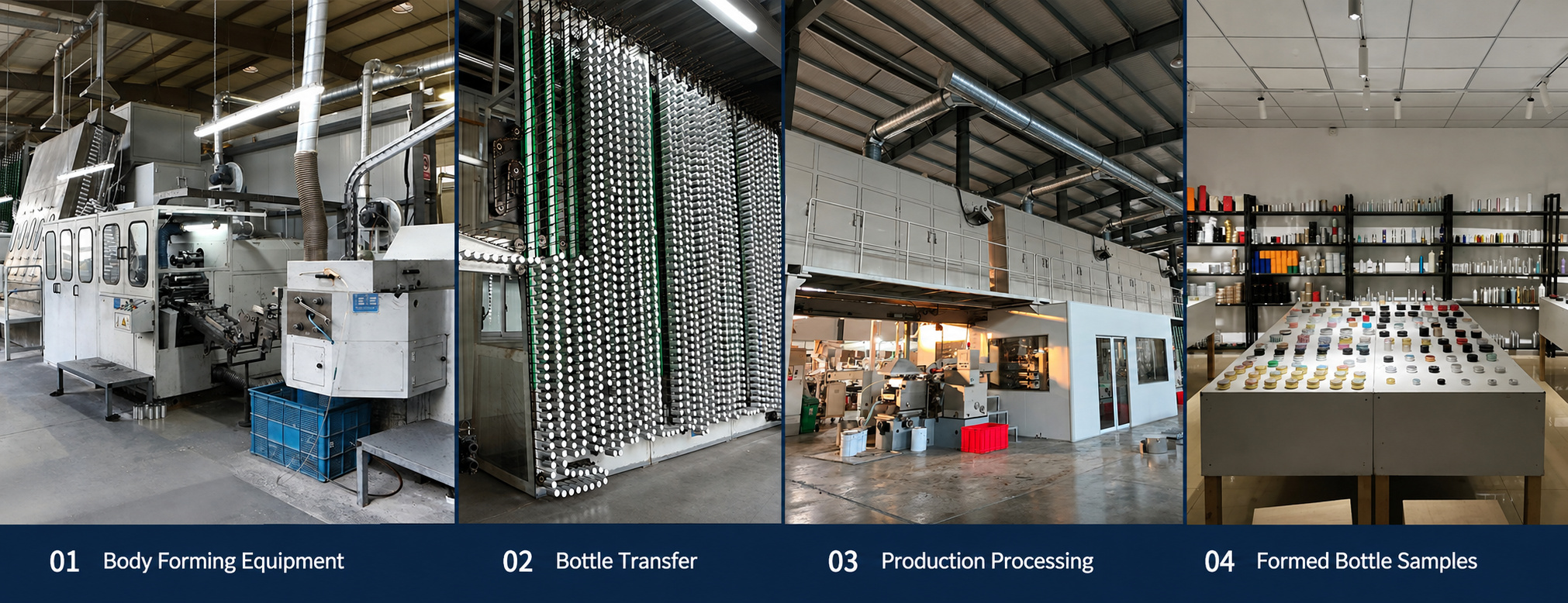 Material and Production Specification Review
Before forming begins, the aluminium material and production specification are checked for the scheduled bottle model. The production reference should identify:
- Bottle capacity
- Overall height and body diameter
- Bottle weight where specified
- Shoulder profile
- Neck and thread requirements
- Surface condition
- Order quantity
- Approved dimensional tolerances
Projects requiring a new capacity or bottle profile should complete sample and tooling approval before bulk production. More information about the development route is available under Bottle Size, Shape & New Tooling.
Impact Extrusion
During impact extrusion, an aluminium slug is formed into a seamless cylindrical bottle body under controlled pressure. The initial body is produced before final trimming, washing, coating and neck formation.
Key production concerns include:
- Incomplete forming
- Uneven body shape
- Visible surface marks
- Body deformation
- Inconsistent height or diameter
- Damage around the opening
- Variation between production batches
Samples are checked during production so that forming problems can be identified before the bottles enter later processing stages. This is especially important for bottles that will receive a smooth colour finish or detailed Logo printing, because forming defects may remain visible after decoration.
Bottle Trimming
After forming, the bottle body is trimmed to control its height and create a consistent opening for subsequent processing. Trimming also prepares the bottle for washing and later necking or threading.
The trimmed edge should be even and free from visible damage that could affect handling or neck formation. Bottle height is checked against the approved specification, while the body is reviewed for distortion introduced during forming or trimming.
This stage does not complete the final bottle neck. Neck and closure dimensions are formed and verified later through the Necking & Closure Matching process.
Dimensional and Appearance Checks
Production checks may cover:
- Overall bottle height
- Outside diameter
- Body profile
- Opening condition
- Shoulder consistency
- Visible forming marks
- Dents and deformation
- Comparison with the approved sample
Measurements are recorded according to the agreed project specification. Bottles that do not meet the required dimensions or appearance should be separated before washing, coating and decoration.
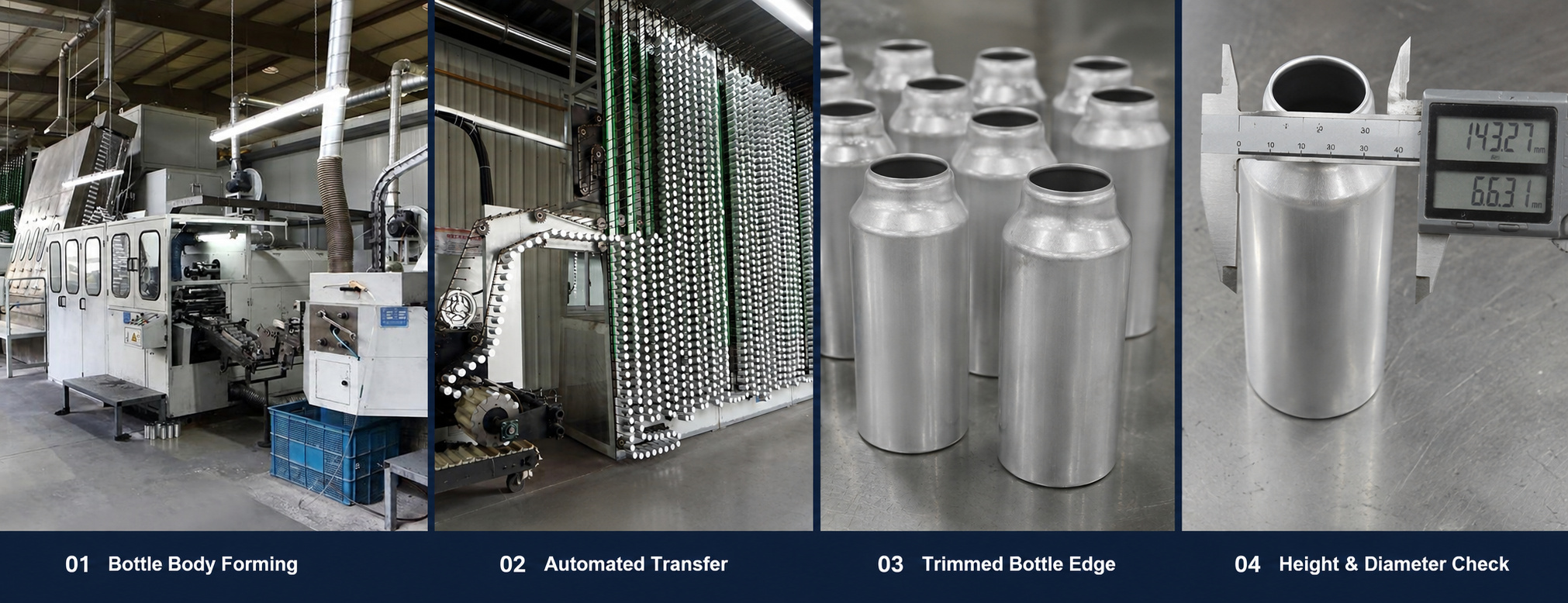 Transfer to Washing and Coating
Accepted bottle bodies are transferred to washing and drying. Cleanliness at this point is important because residues can affect internal coating and external surface finishing.
The next production stage is explained on our Washing, Internal Coating & Curing page.
MOQ, Sampling and Production Planning
Typical MOQ is approximately 5,000–20,000 pieces. Existing-model samples usually require around 7–12 days, while new-tooling development normally requires approximately 20–30 days.
Mass production generally takes about 25–40 days after the bottle sample and specification are approved. Bottle size, tooling, order quantity, coating, printing and packaging can affect the final schedule.
For evaluation, provide the required capacity, dimensions, neck, closure, quantity, drawing or reference sample, surface finish and destination-market requirements.