

Packaging Developed for Branding and Export Protection
Aluveriq Packaging supports private-label packaging for aluminium cosmetic bottles, spray bottles, beverage bottles and aluminium jars. The service is designed for importers, packaging distributors and private-label brands purchasing OEM or repeat bulk orders.
Packaging is reviewed together with the bottle model, closure, colour, Logo and shipping method. Aluminium bottles require suitable protection against scratches, dents and movement inside the carton, especially when they have coated or printed surfaces.
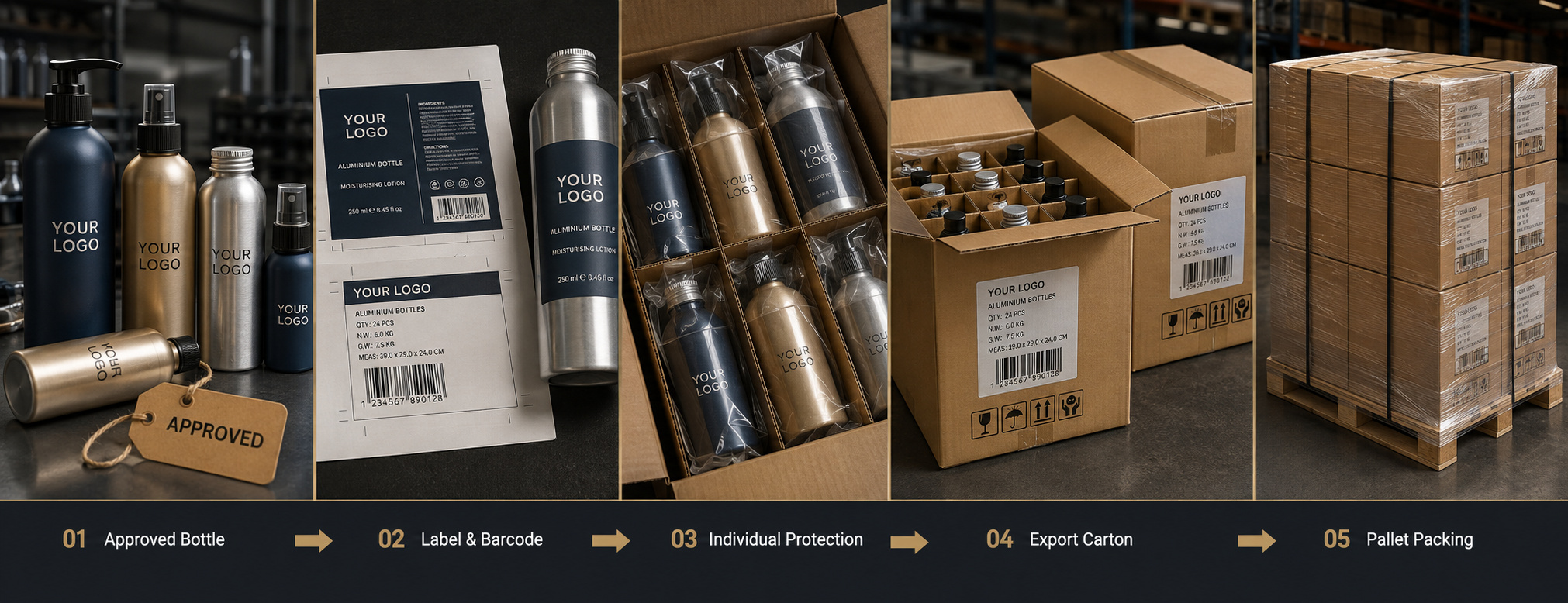 Label, Barcode and Brand Information
Private-label requirements may include product labels, barcode labels, carton marks and other buyer-supplied information. Buyers should provide final artwork, dimensions, placement instructions and barcode data before packaging materials enter production.
The approval process should confirm:
- Correct artwork version
- Label size and material
- Bottle or carton placement
- Barcode content and readability
- Product identification
- Carton marks
- Quantity by design or market
If the bottle also requires direct Logo decoration, the printed bottle and packaging artwork should be reviewed together. This helps prevent differences in colour, Logo size or brand presentation. Related decoration requirements are covered under Colour, Printing & Logo Branding.
Individual Bottle Protection
The protective method depends on the bottle finish, closure and packing arrangement. A brushed aluminium bottle, coated bottle and printed bottle may require different handling to avoid rubbing and visible surface damage.
Available packing arrangements can include:
- Individual PE bags
- Protective sleeves where applicable
- Corrugated cardboard dividers
- Inner boxes
- Separate packing for pumps or sprayers
- Protective layers between bottle rows
- Quantity labels
Closures may be fitted to the bottle or packed separately according to the approved specification. Pumps and sprayers should be positioned carefully to avoid bent dip tubes, damaged actuators or pressure against the bottle surface.
Export Cartons and Pallet Packing
Export cartons are selected according to bottle dimensions, gross weight, divider structure and shipping method. Carton size should control movement without placing excessive pressure on the aluminium bodies.
Packing confirmation normally covers:
- Pieces per inner pack
- Pieces per export carton
- Divider arrangement
- Closure packing
- Carton dimensions and weight
- Shipping marks
- Pallet requirements
- Stretch wrapping and strapping
Pallet packing can be arranged when required by the order or destination. The completed cartons are checked for quantity, labels, marks and external condition before shipment.
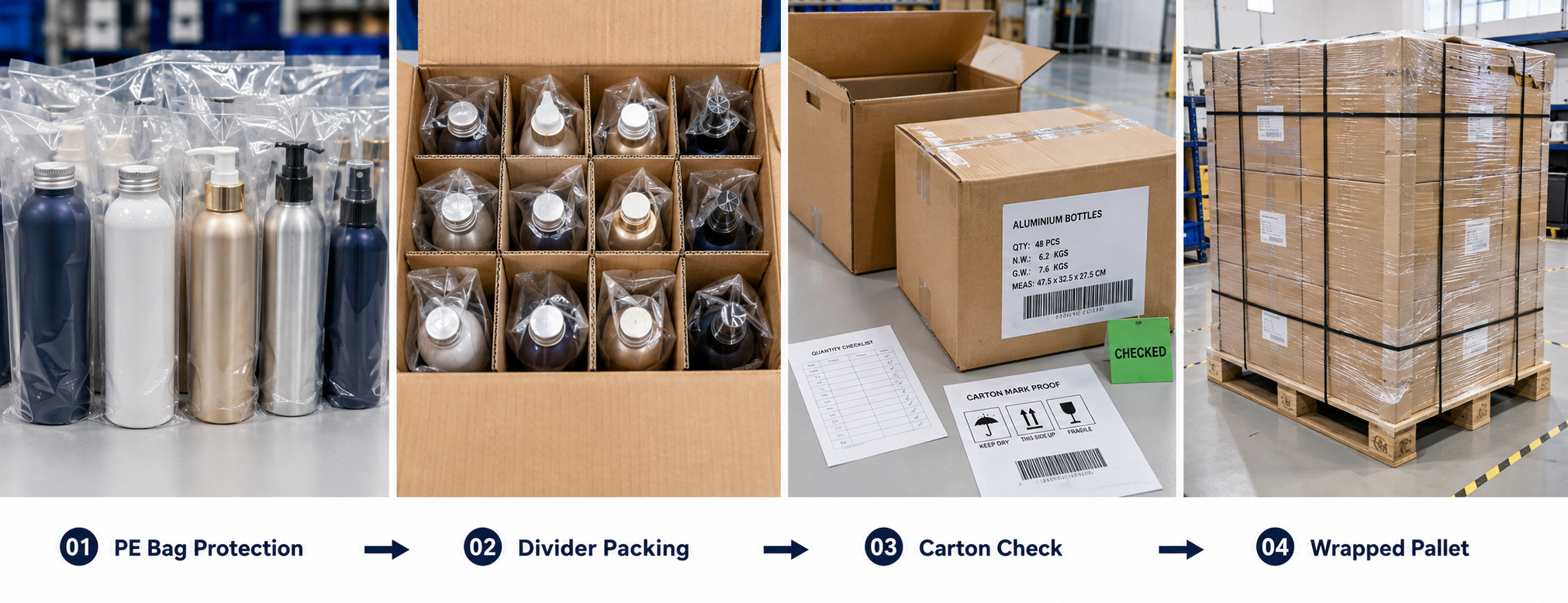 Packaging Sample and Pre-Production Approval
Custom labels, printed cartons or special packing arrangements should be approved before bulk packaging materials are produced. A packaging sample can confirm bottle fit, divider strength, closure position, label placement and carton arrangement.
The buyer should approve:
- Bottle and closure packing method
- Label and barcode artwork
- Inner protection
- Carton quantity
- Shipping marks
- Pallet configuration where required
The approved packing specification becomes part of the production order and final inspection standard. Packaging checks are included within Quality Control & Leak Testing.
MOQ, Lead Time and Quotation Requirements
Typical bottle MOQ is approximately 5,000–20,000 pieces. Custom labels, printed cartons or other packaging materials may have separate practical minimum quantities.
Mass production normally requires around 25–40 days after the bottle sample, artwork and packaging specification are approved. Complex packaging or multiple artwork versions may extend the schedule.
For quotation, provide the bottle model, closure, quantity, artwork, label or barcode requirements, individual packing method, carton requirements, destination country and preferred shipping term. These details allow us to review the packaging cost, protection method and export preparation before production.